Alerts & fraud · 6 min read
Card Skimming: How to Spot It and Protect Yourself
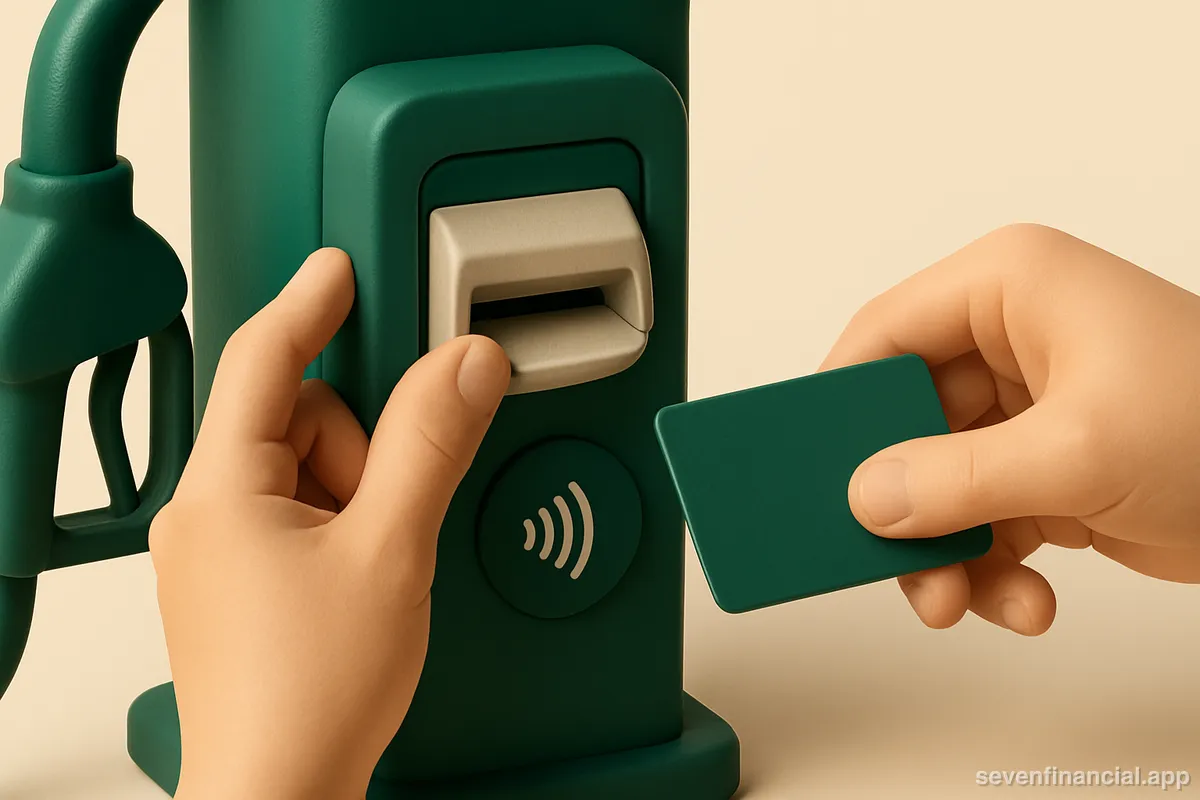
To protect against card skimming: pay with tap-to-pay or a mobile wallet instead of swiping or inserting whenever you can, inspect card readers at gas pumps and ATMs before using them (wiggle the reader, check for loose or mismatched parts), cover the keypad when you enter a PIN, and favor pumps and ATMs in well-lit, high-traffic spots near the attendant or inside a bank branch. Then assume prevention will sometimes fail, and set up transaction alerts so a stolen card number gets caught on day one instead of at the end of the statement cycle.
What is card skimming, exactly?
A skimmer is a small device a criminal attaches to a legitimate card reader — most often at gas pumps, outdoor ATMs, and other unattended terminals. When you swipe, the skimmer copies the data on your card's magnetic stripe while the real reader processes your payment normally. You get your gas or your cash, nothing looks wrong, and the thief now has enough to clone your card or run online purchases. Some setups add a pinhole camera or a fake keypad overlay to capture your PIN too, which is what turns a card problem into a drained-checking-account problem.
A newer variant, often called shimming, targets the chip instead of the stripe: a paper-thin insert sits inside the card slot and reads data as the chip transaction happens. Shimmed data is harder for criminals to reuse than stripe data, but the takeaway is the same — the slot itself is the attack surface. Contactless payments skip the slot entirely, which is a big part of why tap is safer.
How do I spot a skimmer before I pay?
You will not catch every skimmer — good ones are nearly invisible — but a ten-second inspection catches the sloppy ones, and most are sloppy. Before you insert a card at a gas pump or standalone ATM:
- Wiggle the card reader and the keypad. Real hardware is solidly mounted; overlays that sit on top of the real reader often flex, rock, or pull off with light pressure.
- Compare with the pump next to you. Skimmers are usually installed on one pump, not all of them. A reader that's a different color, sticks out farther, or looks newer than its neighbor is a red flag.
- Check the security seal on gas pumps. Many stations put tamper-evident tape over the cabinet door; if it's broken, torn, or says VOID, use a different pump and tell the attendant.
- Look for anything covering or surrounding the keypad, and for tiny holes above it where a camera could sit.
- At ATMs, be suspicious of loose parts, glue residue, or a card slot that grabs your card oddly. If the machine keeps your card, call the bank's number printed on the ATM — not a number a bystander helpfully offers.
Location matters as much as inspection. Skimmers get installed where nobody is watching: the pump farthest from the register, the freestanding ATM in a dim corner of a convenience store. The pump by the door and the ATM inside a bank lobby are watched, serviced, and checked far more often.
Tap, insert, or swipe: which is safest?
From safest to riskiest: mobile wallet, physical tap-to-pay, chip insert, magnetic swipe. Apple Pay and Google Pay never transmit your real card number at all — the terminal sees a device-specific token plus a one-time cryptogram, so even a fully compromised terminal captures nothing reusable. A physical contactless card also uses one-time cryptograms and never enters the slot. Chip inserts are vulnerable to shimming, though the stolen data is hard to monetize. The magnetic stripe is the jackpot: static data, trivially cloned. If a terminal claims tap is broken and asks you to swipe, that's worth a moment of suspicion — disabling tap to force a swipe is a known trick.
Two more habits close most of the remaining gap. First, run debit cards as credit at the terminal when you can, or better, use an actual credit card for gas and unattended terminals — credit card fraud is the bank's money while it's disputed; debit fraud is your money until it's returned. Second, when you must use a PIN, cover the keypad with your other hand. A skimmer without the PIN can clone a card for purchases; a skimmer with the PIN can empty an account at an ATM.
How do I catch a skimmed card fast?
Assume that eventually a skimmer wins, because inspection is a coin flip against a well-made one. The real defense is shrinking the window between the first fraudulent charge and the moment you see it. Criminals who buy skimmed card numbers typically test them with a small charge — a couple of dollars at an online merchant — before running bigger ones. Catch the test charge and you've lost almost nothing; there's a full playbook in how to catch fraudulent charges before they snowball.
Concretely, an example of how this plays out: your number gets skimmed at a pump on a Tuesday. Wednesday there's a $2.47 test charge at an unfamiliar web store. Thursday it's $180 at an electronics site and $310 in gift cards. With no alerts, you find all of it three weeks later on your statement and spend an evening reconstructing what's real. With a real-time notification on every card-not-present transaction, your phone buzzes Wednesday at $2.47, you freeze the card in your bank's app, and Thursday never happens. That's the difference alerts make — large-purchase alerts and unusual-spending alerts are the low-effort versions of the same idea, and an aggregator like Seven Financial can watch every card in one feed instead of making you check five bank apps.
What should I do if my card was skimmed?
- Freeze or lock the card immediately in your bank's app. This stops new charges while you sort out the old ones and is instantly reversible if you're wrong.
- Call the bank or card issuer, report the charges as fraud, and request a replacement card with a new number. For debit cards, ask explicitly about provisional credit timing.
- Work through anything you're unsure about with a calm checklist — some "fraud" turns out to be a merchant billing under a weird name; see a charge you don't recognize before disputing everything in sight.
- Dispute the confirmed fraudulent charges. Card networks have zero-liability policies for fraud, and federal law caps your liability further; the process is straightforward and worth doing properly — here's how to dispute a credit card charge, step by step.
- Update any legitimate subscriptions or autopay set to the old number once the replacement arrives, so you don't trade a fraud problem for a missed-payment problem.
- If your PIN may have been captured, change it, and report the location (gas station, ATM owner, and local police non-emergency line) — skimmers usually stay installed until someone reports them.
One reassurance worth internalizing: skimming is a hassle, not a catastrophe, if you report promptly. On credit cards, fraud liability is capped at $50 by law and almost always waived to $0 in practice. Debit is stricter about timing — reporting within two business days of learning about the fraud keeps your maximum liability at $50, but waiting can raise it substantially — which is one more reason the alert-fast, report-fast habit matters more than any single inspection at the pump.
Does chip and tap mean skimming is going away?
It's shrinking where chip and tap are enforced, and concentrating where they aren't. In-person cloned-card fraud has gotten harder in the US since chip adoption, so skimming operations focus on the remaining stripe-friendly targets — older gas pumps, standalone ATMs — and stolen numbers increasingly get used online, where no physical card is needed. That means the threat follows your card number, not your card. Protecting the plastic at the pump is half the job; watching the account behind it is the other half. A weekly two-minute scan of recent transactions across all your cards, plus alerts doing the daily watching, covers the online tail of a physical skim.
Frequently asked questions
Can a skimmer read my card through my wallet or pocket?
Practically, no. Contactless cards only respond within a couple of inches, transmit a one-time cryptogram rather than reusable stripe data, and never expose your PIN. Real-world skimming happens at readers you willingly use, not from someone brushing past you — RFID-blocking wallets defend against a threat that barely exists.
Are gas station apps safer than paying at the pump?
Generally yes. Paying inside the station's app or with a mobile wallet at the pump means your physical card never touches the pump's reader, which is where skimmers live. The app charge is tokenized like any other card-on-file payment.
How long after skimming do fraudulent charges usually start?
It varies from hours to months. Skimmed numbers are often sold in batches, so a card skimmed today might not be used for weeks. That delay is why you often can't identify where the skim happened — and why ongoing monitoring beats trying to pinpoint the compromised pump.
Should I stop using debit cards entirely?
You don't have to, but keep them away from gas pumps and unattended terminals, where skimming risk is highest and where PIN capture can expose your actual bank balance. Using a credit card or mobile wallet there, and reserving the debit card for your own bank's ATMs, removes most of the risk without changing how you bank.