Money setup · 6 min read
Is Money Sitting in Venmo or Cash App Actually Safe?
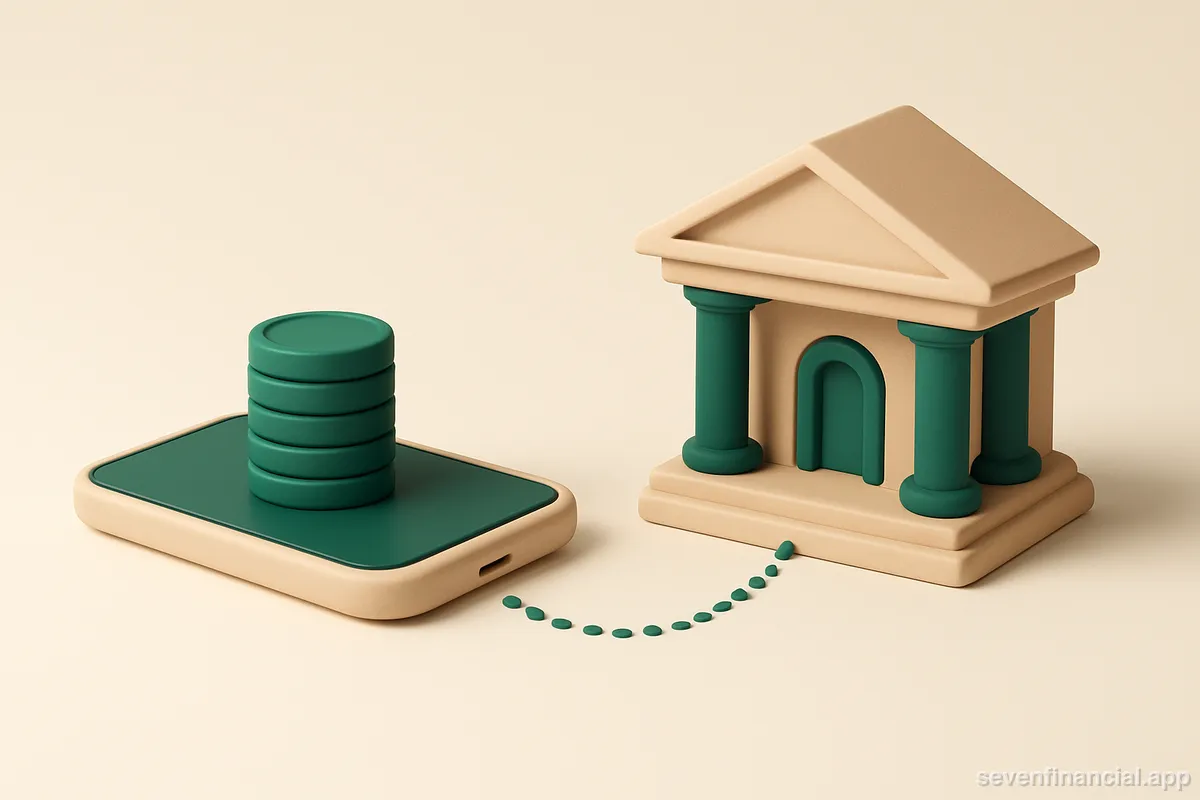
Money sitting in your Venmo or Cash App balance is usually not FDIC insured by default. These are payment apps, not banks — your balance is a claim against the company, not a deposit at an insured institution. Both apps can extend "pass-through" FDIC insurance in specific situations, such as when you set up direct deposit or use certain features that cause your funds to be held at a partner bank, but a plain balance from friends paying you back typically doesn't qualify. The money isn't likely to vanish tomorrow, but it has weaker legal protection than a checking account, earns nothing, and can be frozen by the app with little recourse.
Is money in Venmo FDIC insured?
By default, no. FDIC insurance protects deposits at a failed bank, and Venmo is not a bank. When your cousin sends you $60 for concert tickets and it lands in your Venmo balance, that money sits in accounts Venmo's parent company controls. If the company itself ever failed, you would be a creditor in a bankruptcy, standing in line with everyone else — not an insured depositor who gets made whole by the FDIC within days.
The exception is pass-through insurance. When a payment app sweeps customer funds into a custodial account at an FDIC-insured partner bank and keeps records showing exactly whose money is whose, the FDIC can treat each customer as if they held the deposit directly — but only if that partner bank fails, and only if the record-keeping holds up. Venmo has said balances become eligible when you use features like direct deposit or check cashing; Cash App has similar arrangements tied to certain features. The important word in all of it is "eligible." Insurance status depends on how you use the app, and most casual users never trigger it.
One more subtlety that surprises people: pass-through insurance protects you if the partner bank fails. It does not protect you if the app company fails, gets hacked at the corporate level, or simply freezes your account. Those are different risks, and FDIC insurance was never designed to cover them.
What can actually go wrong with money in a payment app?
The realistic failure modes are less dramatic than a company collapse, but they happen to ordinary users all the time:
- Account freezes. Payment apps run automated fraud and compliance systems, and a flagged transaction — even a false positive — can lock your balance for days or weeks while you email support and upload ID photos. There's no branch to walk into.
- Scams and mistaken payments. Payments between individuals are typically treated as authorized transfers. If you're tricked into sending money to a scammer, or fat-finger a payment to the wrong username, you often have far less recourse than you would disputing a credit card charge.
- Account takeover. If someone gets into your app account, they can drain the balance and the linked funding sources. Protections exist for unauthorized transfers, but the process is slower and murkier than a bank fraud claim.
- No interest. A balance in a payment app usually earns nothing, so money parked there quietly loses ground to inflation for as long as it sits.
- Invisibility. App balances rarely show up in your mental accounting. A few hundred dollars in Venmo is real money that most people forget they have.
None of these are reasons to avoid payment apps. They're reasons to treat the balance as a hallway, not a room — money passes through, it doesn't live there.
How much money is too much to keep in Venmo or Cash App?
A useful rule: keep only what you'd be annoyed — not hurt — to lose access to for a month. For most people that's under a couple hundred dollars. Here's a concrete example of how balances creep up without anyone deciding to save in the app:
- January: three friends split a $220 dinner and each Venmo you their share. Balance: $165.
- February: you sell an old monitor for $90 and get paid through the app. Balance: $255.
- March: a roommate pays $410 toward utilities before you've paid the bill from your bank account. Balance: $665.
By spring, $665 is sitting in an account that probably isn't insured, earns no interest, and could be frozen by an algorithm. Moved to a high-yield savings account paying around 4%, that same money would earn roughly $27 a year — small, but the real gain is that it's now inside FDIC coverage and inside your actual financial picture. If you're mapping out where every dollar should live, how many bank accounts you actually need is the natural next question.
Set a sweep habit
The simplest fix is a recurring reminder — say, the first of the month — to transfer everything above a small float to your bank. Standard transfers are typically free and take one to three business days; instant transfers cost a percentage fee, which is rarely worth paying for a routine sweep. If you already automate your paycheck with a split direct deposit, think of this as the same principle applied in reverse: money should flow toward its long-term home without requiring willpower.
Payment app vs. bank account: what protections do you give up?
It helps to be precise about what a bank account gives you that a stored app balance usually doesn't:
- Deposit insurance by default, not by feature. A checking account is FDIC insured up to the standard limits the moment you open it. No conditions to trigger, no eligibility fine print.
- Stronger dispute mechanics. Errors and unauthorized transactions on bank accounts run through well-worn regulatory processes with deadlines the bank must meet.
- Regulated failure handling. If a bank fails, the FDIC steps in over a weekend. If a payment company fails, customers wait on a bankruptcy court.
- A paper trail you control. Bank statements are standardized and exportable; knowing how to read a bank statement gives you a level of visibility app activity feeds don't match.
Payment apps are genuinely good at the thing they were built for: moving small amounts between people quickly. The mismatch only appears when a tool built for transfers gets used for storage.
Should you count your Venmo balance in your net worth?
Yes — it's your money, so it belongs on the asset side, the same as checking or savings. The problem is practical, not conceptual: app balances are the accounts people most often forget when they calculate their net worth, precisely because the money arrived passively and no statement ever lands in your mailbox. If you track your accounts in one place, connect the payment app alongside your banks so the balance can't hide; Seven Financial, for example, aggregates Venmo with bank and investment accounts through Plaid so the number shows up in your net worth automatically. And because an app balance transfers to your bank in a day or two, it counts fully toward your liquid net worth — arguably the version of the number that matters most day to day.
The bottom line: money in Venmo or Cash App is reasonably safe for days, questionable for months, and pointless for years. Use the apps for what they're great at — splitting the dinner bill — and keep your actual cash where it's insured by default, earns interest, and answers to banking regulators rather than a support inbox. This is general information, not financial advice; insurance terms and app policies change, so check the current disclosures for any app where you hold a meaningful balance.
Frequently asked questions
What happens to my Venmo money if Venmo shuts down?
If your balance isn't covered by pass-through FDIC insurance, you'd be an unsecured creditor in the company's bankruptcy, which can mean waiting months or years and recovering only part of your money. That's the core difference from a bank failure, where the FDIC typically restores insured deposits within days.
Does linking my bank account to Venmo or Cash App put my bank money at risk?
Linking itself doesn't move money, but a compromised app account could initiate transfers from the linked bank account, so protect the app with a strong unique password and two-factor authentication. Unauthorized bank transfers generally carry legal protections, but you must report them quickly.
Is money in PayPal or Apple Cash treated the same way?
The pattern is similar across stored-balance products: the balance is generally not FDIC insured by default, and pass-through coverage depends on how the funds are held and which features you use. Always check the specific product's current terms rather than assuming coverage.
Are instant transfers out of Venmo worth the fee?
For an emergency, maybe — paying a small percentage to have cash in your bank within minutes can be reasonable. For routine sweeps, the free standard transfer arriving in one to three business days accomplishes the same thing at zero cost, so schedule sweeps before you actually need the money.